
Investment portfolios have come a long way from stocks and bonds. In 2026, plenty of collectors are putting real money into tangible assets – fine art, classic cars, and increasingly, high-end wine collections. And unlike shares that sit quietly in a digital account, your “liquid asset” needs very real, very physical protection.
If your cellar is worth five, six, or even seven figures, you’re not “just” collecting – you’re looking after an asset that can be damaged, devalued, or (in the worst cases) ruined. Temperature control issues, accidental breakage, theft, and fast-moving market prices for vintage wines can all affect what your collection is worth and how easily you can sell it. So let’s talk about what actually matters when you’re protecting a serious wine collection in 2026.
Why wine (now)
Fine wine has become one of those alternative assets that’s easy to underestimate – until you see auction results for top vintages, big names, and limited releases. Some bottles climb steadily; others jump on scarcity, critic scores, or a suddenly fashionable region.
But wine is fussier than most investments. It doesn’t like heat, it doesn’t like light, and it definitely doesn’t like being knocked about during a house move. And while a wristwatch might survive a clumsy handover, a single dropped case of wine can wipe out thousands of pounds in a second. That’s why the “boring” stuff – storage, documentation, and insurance – ends up doing a lot of heavy lifting.

Temperature
Temperature control is the big one in 2026 – and it’s not just collectors being fussy. Wine is sensitive to heat and rapid temperature swings, which can push corks, cause seepage, speed up ageing, and leave you with bottles that are “fine for drinking” but much harder to sell.
For most fine wines, you’re aiming for stable, cool conditions rather than chasing a perfect number on a thermostat. As a rule of thumb, many collectors target around 12–14°C, with consistency doing more good than constant tweaking. And if you’ve ever had a home improvement show moment (new kitchen, new underfloor heating, and suddenly the “cool corner” isn’t cool anymore) you’ll know how easy it is for a room’s temperature profile to change.
A few practical checks that are worth doing:
- Keep your cellar/storage away from boiler rooms, utility spaces, and sunny external walls
- Use a temperature logger so you can see spikes you’d otherwise miss
- Avoid “weekend adjustments” – regular swings are what do the damage
- If you use professional storage, ask how they monitor temperature and what happens during power cuts
Humidity
Humidity matters because corks are part of the storage system. Too dry and corks can shrink (hello oxygen ingress); too damp and you’re inviting mouldy labels, damaged capsules, and packaging issues that can knock resale value.
You don’t need to obsess over it, but you do want a controlled range – many collectors look for something around 60–70% to keep corks healthy without turning the place into a rainforest.
Light and vibration
Direct light and constant vibration are quiet troublemakers. UV can degrade wine over time, and vibration can disturb sediment and accelerate ageing. So keep bottles in darkness where possible and avoid storing next to anything that hums all day (fridges, pumps, or that “temporary” tumble dryer you promised wouldn’t live in the cellar).
Insurance gaps
Here’s the classic (painful) scenario: you’ve built a collection over years, you’ve stored it “properly”, and you assume it’s automatically covered. Then there’s a flood, a fire, or a break-in – and you find out the policy limit for “wine/spirits” is nowhere near what you own. Or the cover applies at purchase price, not current market value.
With vintage wines in 2026, market value is the moving target. Prices can shift quickly – especially for top Bordeaux, Burgundy, Champagne, Barolo, and cult producers – so insurance that isn’t reviewed can leave you underinsured without realising.
When you’re arranging cover for a high-end wine collection, it’s worth checking that it includes:
- Accidental damage (breakage when handling or during a move – the most human of risks)
- Fire, flood, escape of water, and other home disasters (yes, including the washing machine hose that decides to quit)
- Theft, including from outbuildings if you store there
- Temperature-related loss (for example, failure of cooling equipment) where this is available/appropriate
- Transit cover for bottles moving between merchants, storage, home, and auction
If you keep wine at home, you’ll usually need the collection clearly declared and itemised, especially once values move beyond typical “contents” limits. And if you use professional storage, don’t assume the facility’s insurance automatically matches your exposure – ask what they cover, what they exclude, and what the maximum payout looks like in real life.
For options around protecting high-value collections as part of your contents cover, see our insurance page – High Value Home Insurance
Records
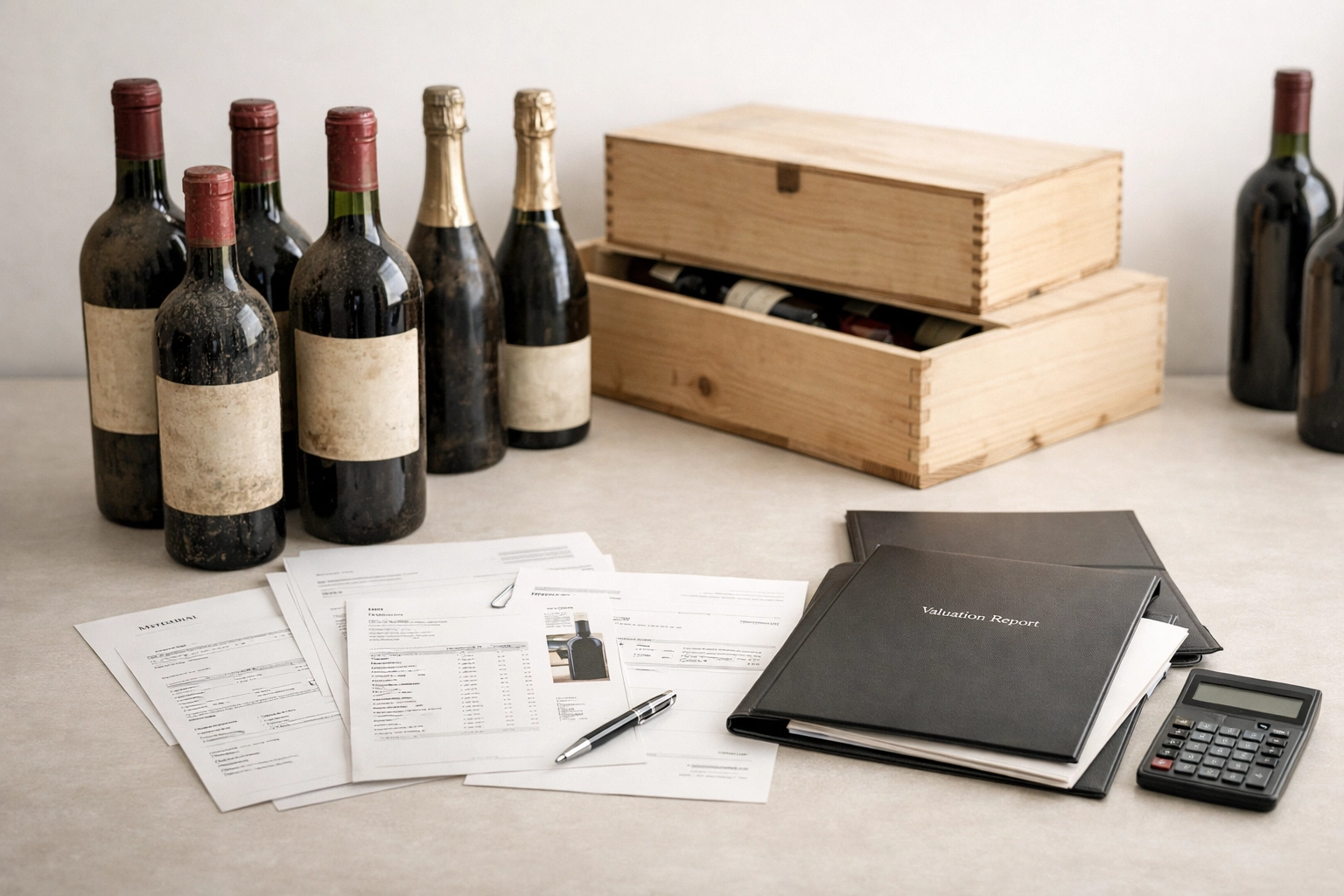
With fine wine, paperwork isn’t glamorous – but it’s what makes claims smoother and resale easier.
If you ever need to claim, or you decide to sell through a merchant or auction, you’ll be glad you kept:
- Purchase invoices/receipts (including case numbers where available)
- Provenance details (merchant, auction, private sale – and any supporting documents)
- Storage history (professional storage statements or your own temperature logs)
- Photos of key bottles/cases (labels, fill levels, original packaging)
- Valuations (especially for higher-value bottles or entire cases)
And don’t forget the boring admin bit: keep digital copies in a secure cloud folder, not just on a laptop that might be sitting in the same house as the wine.
Market value
Wine has its own kind of risk: it can be perfectly stored and still change in value. In 2026, you’ll see swings driven by vintage re-ratings, changing demand in global markets, and simple scarcity as bottles get consumed. That’s great on the way up – but it also means your insurance sums insured can quietly fall behind.
A few sensible habits:
- Revalue the collection regularly (annually is sensible for larger cellars)
- Watch for “star bottles” that have outgrown the rest of your cover
- Keep an eye on condition – labels, capsules, and fill levels affect price more than most people expect
Physical damage
This is the risk no-one wants to talk about because it’s so… normal. Bottles break. Racks fail. A builder moves something “just for a second”. A cork dries out. A cellar fridge gives up during a heat spike.
If you take one thing from this section, make it this: protect the collection from everyday accidents, not just big dramatic events. Good racking, sensible bottle handling, and safe packing for transport do a lot of the work.
Practical steps
So what does a properly protected wine collection look like in real life? Here’s a quick checklist you can actually use:
Storage
- Aim for stable temperature (often around 12–14°C) and controlled humidity
- Keep bottles out of light and away from vibration
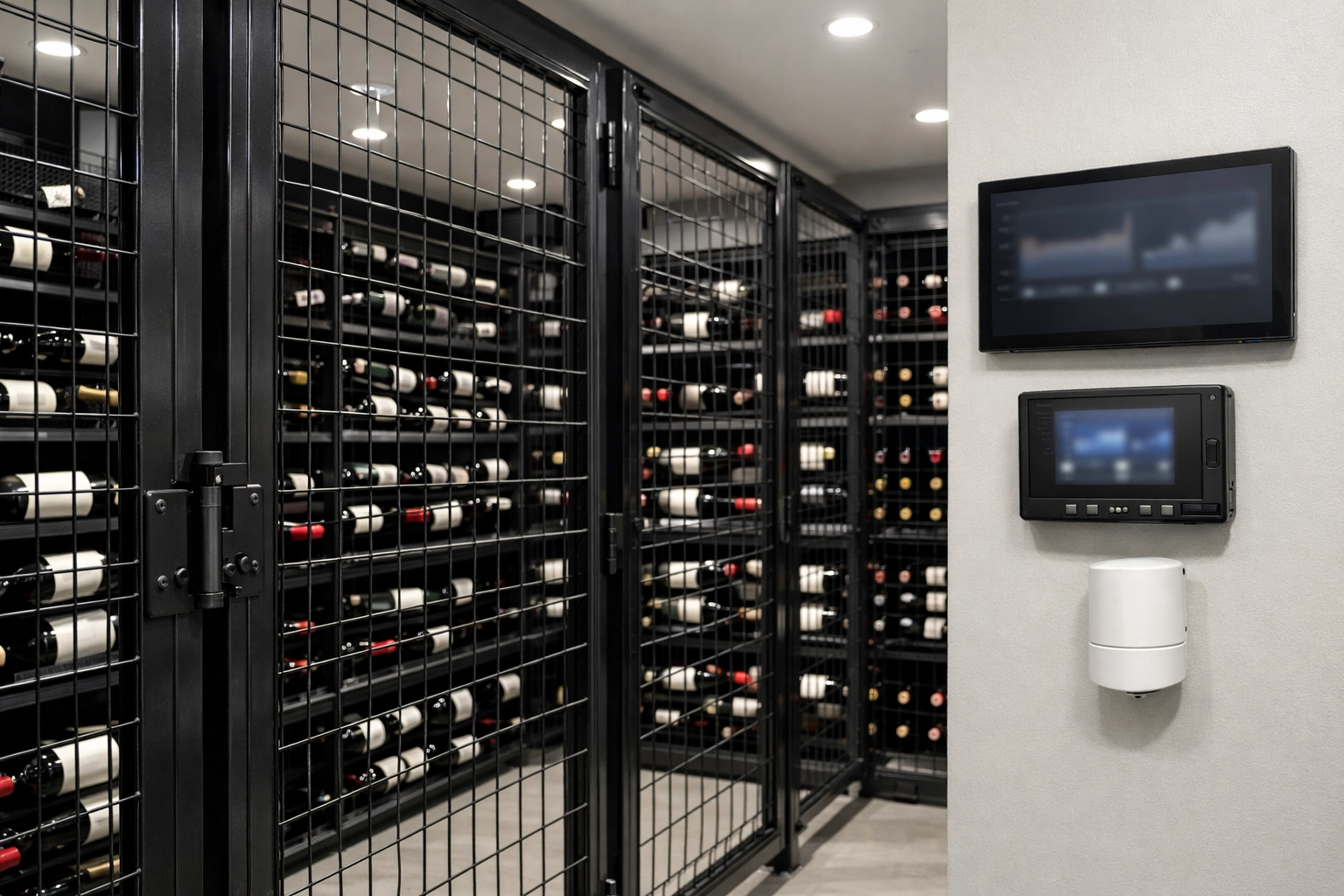
- Use proper racking – secure, level, and appropriate for bottle shape/size
- For larger collections, consider professional storage with monitoring and backup plans
Damage prevention
- Store cases low and stable (avoid “towering stacks” that look fine until they don’t)
- Use proper packaging for moves and deliveries – especially for older bottles
- If you’re renovating, move the wine out temporarily (dust, heat, and accidental knocks add up fast)
Market value
- Revalue regularly – and update your insurance to match
- Flag your top-value bottles/cases so they’re properly itemised
- Keep an eye on condition, because labels and fill levels affect resale
Documentation
- Keep invoices, storage statements, and photos
- Save digital copies somewhere safe and separate from the property
- Consider a professional valuation for higher-value cellars
The bottom line
A high-end wine collection can be a joy to own – and, in 2026, a serious asset in its own right. But it only stays valuable if you look after the three big risks: temperature control, physical damage, and market value changes.
The good news is none of this needs to be complicated. Stable storage, sensible handling, good records, and insurance that actually reflects what you own will put you in a strong position – whether you’re cellaring for the long term or planning to sell at the right moment.
If you want help making sure your cover keeps pace with a high-value collection, speak to T&R Direct Insurance Services.
And for more articles like this, visit: https://trdirect.co.uk/blog





About The Author: Penny
More posts by Penny