
If you're a musician gearing up for the 2026 festival circuit, you'll already know the calendar's starting to fill up fast. From Reading and Leeds to Download, Latitude to the BBC Proms, summer 2026 is shaping up to be massive – and that means your instruments, equipment, and peace of mind need to be ready for the road.
Whether you're hauling a vintage Gibson across the country in the back of a transit van or transporting a £15,000 cello to the Royal Albert Hall, there's a lot that can go wrong between your studio and the stage. And whilst Glastonbury might be taking its scheduled fallow year in 2026, there's still no shortage of high-profile gigs and festival slots that'll put your gear – and your wallet – on the line.
So before you start loading up the van, let's talk about what you actually need to protect, and why standard home insurance probably won't cut it when you're gigging professionally.
What's Actually at Risk?
It's easy to think about the big-ticket items – your instruments, your amp, your DJ decks – but performance gear adds up fast. When you start itemising what you're taking on the road, the value can be eye-watering.
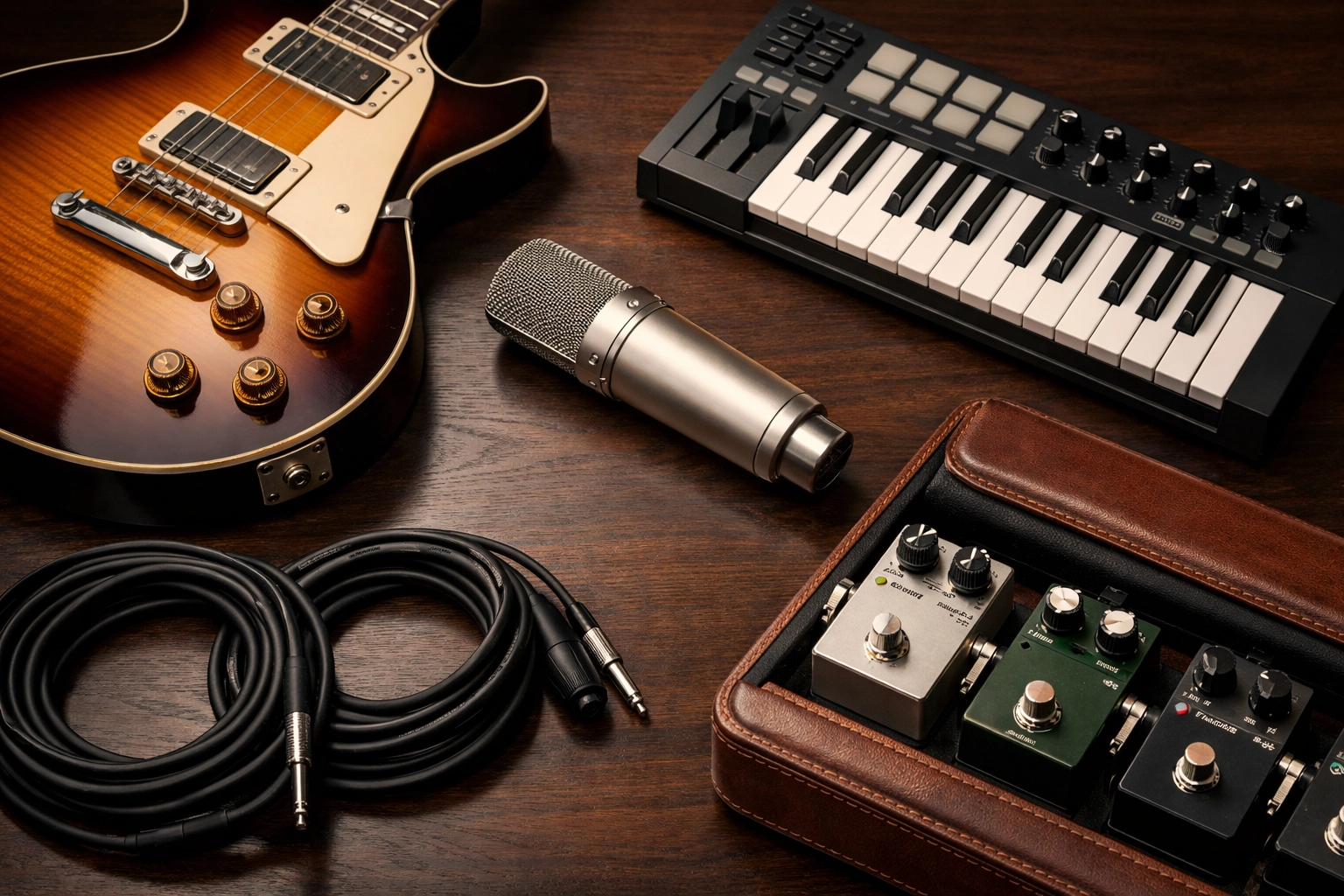
You've got:
- Instruments – guitars, basses, keyboards, brass, strings, drums, synths. Some of these are irreplaceable vintage pieces, others are high-end modern kit that cost thousands.
- Amplification and PA systems – speakers, mixers, amps, monitor wedges. If you're self-sufficient, this gear can easily run to £10,000 or more.
- Electronics and tech – laptops, sequencers, loop stations, effects pedals, MIDI controllers, in-ear monitoring systems.
- Accessories – leads, cases, flight cases, mic stands, drum hardware, pedal boards.
- Merchandise and staging – if you're selling merch or bringing your own lighting rig, that's more value in the van.
Add it all up, and you're looking at a mobile music shop worth tens of thousands of pounds. That's a lot to lose if something goes sideways.
The Transit Trap
Here's the thing most musicians don't think about until it's too late – the journey to the gig is often riskier than the performance itself.
You're loading and unloading multiple times. You're parking in service stations, outside venues, in dodgy back alleys behind festivals. Your van might be sat overnight in a hotel car park or an unfenced field. And let's be honest – most musicians aren't driving around in armoured vehicles with tracking systems and deadlocks.
Theft from vehicles is one of the most common claims we see for band insurance. A broken window and a few minutes is all it takes for someone to walk away with £20,000 worth of gear. And if your equipment isn't specifically insured for transit? Your standard home contents policy won't touch it.
Then there's damage in transit. Potholes, emergency stops, someone dropping a flight case off the back of a truck – it happens more than you'd think. Instruments are delicate. A crack in a guitar neck or a dent in a brass instrument can cost hundreds or even thousands to repair, if it's repairable at all.
Festival-Specific Challenges
Playing festivals comes with its own set of risks. You're dealing with outdoor stages, unpredictable weather, huge crowds, and temporary infrastructure that isn't always as secure as a permanent venue.
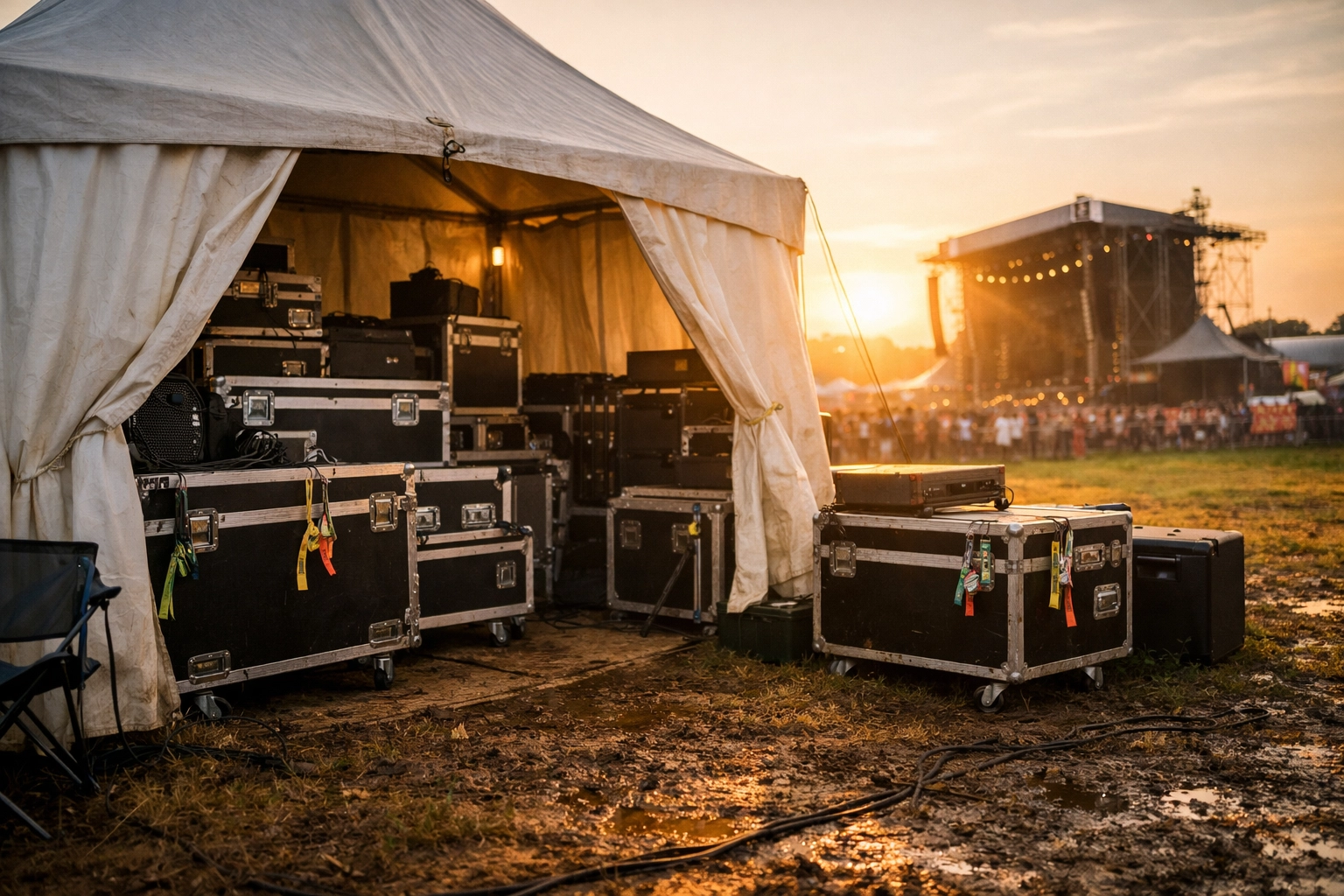
Weather damage is a big one. Ever seen a drum kit after a thunderstorm hits mid-set? Or watched a keyboard get soaked because the stage canopy couldn't handle a downpour? Water and electronics don't mix, and festival organisers' insurance won't cover your personal gear.
Backstage security varies wildly. At some festivals, your gear is locked down tight. At others, you're basically in a tent with a zip and a prayer. Theft from backstage areas, dressing rooms, and storage compounds is common.
Public liability is another consideration. If you're performing at a festival and something goes wrong – maybe a speaker falls and injures someone, or a piece of your equipment causes damage – you could be personally liable. Most festivals now require performers to have their own public liability insurance before they'll let you on site.
The Proms and Classical Circuit
If you're on the classical or jazz circuit – heading to the Proms, Wigmore Hall, or touring with an orchestra – you're dealing with a different set of risks but the same need for proper cover.
High-value instruments are a magnet for thieves. A professional-grade cello or violin can be worth £50,000 or more. Bows alone can run into five figures. And unlike electric guitars, these instruments can't just be replaced – many are antiques or bespoke commissions that have appreciated significantly in value.
Transit is even more critical for classical musicians. You're often travelling by train or flying internationally, and airlines have a notorious track record with fragile instruments. Having specific cover for air travel, including denial of boarding or damage by baggage handlers, is essential.
What to Look for in Music Insurance
So what should you actually be looking for when you're shopping around for music insurance or band insurance?
Agreed value cover is crucial for vintage or unique instruments. This means you and the insurer agree upfront what your 1965 Fender Stratocaster is worth, so there's no argument if it's stolen or damaged.
New-for-old replacement on modern equipment means you get a brand-new replacement, not a depreciated payout that leaves you short when you're trying to replace a £3,000 synth.

Public liability cover – typically £2 million to £10 million – protects you if someone's injured or property is damaged because of your performance or equipment.
Transit cover needs to be worldwide if you're touring internationally, and should cover all forms of transport – van, car, train, plane, ferry.
Accidental damage is non-negotiable. Dropping your guitar, spilling a drink on a mixing desk, or someone tripping over a cable and taking out a laptop – these things happen at gigs.
Theft from unattended vehicles should be included, but check the terms. Some policies require gear to be in a locked boot out of sight. Others exclude overnight theft entirely.
Equipment hire cover is handy if your gear fails and you need to hire replacements to fulfil a booking.
Getting the Right Cover
Standard home insurance policies usually have limits on musical instruments – often around £1,500 to £2,000 per item – and they almost never cover professional use, business activities, or equipment in transit for work purposes.
That's where specialist music equipment insurance comes in. These policies are designed for working musicians and cover the specific scenarios you'll actually face – gigging, rehearsing, recording, touring.
At T&R Direct Insurance Services, we work with specialists who understand the music industry and can tailor cover to your specific needs, whether you're a solo artist, a function band, or a touring orchestra.
Don't Wait Until It's Too Late
The time to sort your insurance isn't the night before your first festival slot – it's now, whilst you've got time to compare options, get the right level of cover, and make sure you're not leaving gaps.
Because here's the reality: if your gear gets nicked from the van on the M6 services, or your vintage Les Paul gets damaged in a festival downpour, you're not just out of pocket – you're potentially out of action. No gear means no gigs. No gigs means no income.
The 2026 festival season is going to be brilliant. Make sure you're protected enough to actually enjoy it, rather than spending the whole summer worrying about what might go wrong. Get your music insurance sorted now, and you can focus on what actually matters – playing great gigs and having a cracking summer.
Stay covered, and we'll see you out there.





About The Author: Penny
More posts by Penny