
There's something rather thrilling about a major renovation. The architect's drawings spread across the kitchen table, the promise of that new extension finally becoming reality, the satisfying thought of knocking through that poky galley kitchen into something worthy of a dinner party.
But here's a question that rarely makes it onto the mood board – what happens to your home insurance the moment the builders arrive?
You might be surprised to learn that your carefully chosen policy – the one protecting your period features, your art collection, and your bespoke joinery – may quietly step back the instant scaffolding goes up. And that's a problem worth understanding before the first skip lands on your drive.
The Coverage Gap Most Homeowners Don't See Coming
Standard home insurance policies are designed for one thing – protecting a finished, occupied dwelling. They're brilliant at covering the everyday risks – a burst pipe, a break-in, a tree through the conservatory roof during a storm.
What they're not designed for is a property in flux.
The moment significant building work begins, your home enters a grey area. Walls may be exposed. The roof might be partially removed. Electrical systems could be temporarily disconnected. In insurance terms, your property has stopped being a home and started being a building site.
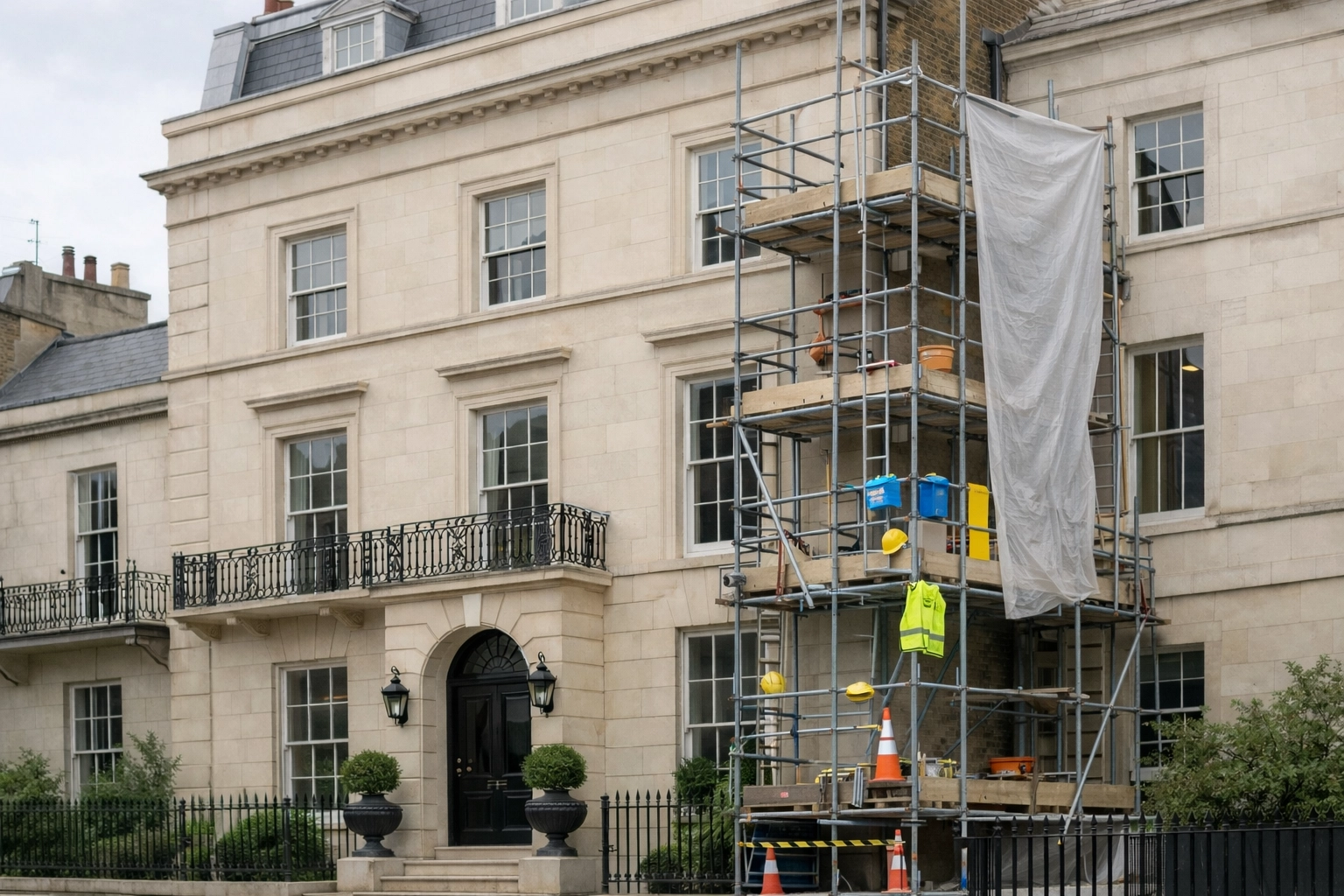
Most standard policies contain clauses that limit or exclude cover when:
- The property is unoccupied for more than 30 consecutive days
- Structural work is being carried out
- The building is left without a secure roof or external walls
- Professional contractors are working on site
This doesn't mean your insurer will automatically cancel your policy. But it does mean that if something goes wrong – a fire breaks out, materials are stolen, or water damage occurs – you may find your claim rejected or significantly reduced.
The Unoccupied Property Problem
Here's where it gets particularly tricky for high-value renovations. Many substantial projects require you to move out temporarily. Perhaps you're adding an entire floor, or the kitchen and bathrooms are being gutted simultaneously. Living elsewhere simply makes sense.
But an empty property presents different risks. There's no one to notice the small leak before it becomes a flood. No one to deter opportunistic theft. No one to spot the electrical fault before it sparks a fire.
Insurance companies know this, which is why most standard policies have strict occupancy requirements. Leave your home empty for more than 30 days, and your cover may be voided entirely – or limited to a narrow set of perils.
If you're planning a renovation that will take you out of the property for an extended period, you'll likely need what's called a vacant home insurance endorsement or a standalone unoccupied property policy. This fills the gap and ensures you're not left exposed during the building phase.
Builder's Risk Insurance: The Missing Piece
So if your standard policy won't fully protect a property under renovation, what will?
The answer is builder's risk insurance – sometimes called contract works insurance or construction all-risks cover. This specialist policy is designed specifically for properties undergoing building work.

Builder's risk insurance typically covers:
- Construction materials – both those already on site and those in transit
- Theft of fixtures and fittings – including those expensive Italian tiles sitting in the hallway
- Fire and weather damage – covering the structure during its vulnerable state
- Vandalism and malicious damage – an unfortunate reality on some building sites
- Accidental damage – because accidents happen, even with the best contractors
Policy terms are usually flexible, running for 6, 9, or 12 months depending on your project timeline. And crucially, this cover kicks in from day one of the build – not after your standard policy has already excluded half the risks.
For high-value properties, where renovation costs can easily run into six figures, this isn't an optional extra. It's essential protection.
The Liability Question
There's another dimension to renovation insurance that's easy to overlook: liability.
During a normal week, your property might see the postman, a delivery driver, perhaps a friend popping round for coffee. During a renovation, you could have dozens of people on site – builders, electricians, plumbers, architects, and the occasional curious neighbour peering over the fence.
More people means more potential for accidents. And if someone is injured on your property, you could be held responsible.

Before any work begins, you need to verify that your contractor carries appropriate insurance, including:
- Public liability cover – protecting against injury to third parties
- Employers' liability – covering their own workers
- Professional indemnity – for architects and designers, covering errors in their plans
Don't be shy about asking for certificates. Any reputable contractor will have these ready and be happy to share them. If they're evasive, that's a red flag worth heeding.
You should also review your own liability cover. Your existing policy may need adjusting to account for the increased foot traffic and heightened risk during the build phase. A quick conversation with your insurer can clarify whether your current limits are sufficient – or whether a temporary uplift is advisable.
Before You Break Ground: A Practical Checklist
The best time to sort your renovation insurance is before the first hammer swings. Here's what to do:
1. Contact your insurer immediately
Don't wait until the scaffolding arrives. As soon as you have a firm plan for the works, speak to your insurance provider. Explain the scope of the project, the expected timeline, and whether you'll be living on site or moving out temporarily.
2. Ask the right questions
Will your current policy remain valid during the works? Are there any exclusions you need to know about? What additional cover do they recommend? A good broker will walk you through the options and help you avoid nasty surprises.
3. Get builder's risk cover in place
If your project is substantial – and most high-value renovations are – arrange specialist construction cover. Make sure it starts from day one and runs until practical completion.
4. Verify your contractor's insurance
Request copies of their liability policies and check they're current. If they're using subcontractors, ensure those workers are covered too.
5. Document everything
Take photographs of your property before work begins. Keep receipts for materials and fixtures. This creates a clear record that will prove invaluable if you ever need to make a claim.
For more guidance on what to document, our guide on renovation insurance essentials is worth a read.
After Completion: Updating Your Cover
The dust has settled. The builders have packed up. Your dream home is finally a reality.
But your insurance work isn't quite finished yet.
Renovations almost always increase your property's value – and therefore its rebuild cost. That stunning new kitchen extension? The converted loft with en-suite? The landscaped garden with outdoor kitchen? All of these add to what it would cost to rebuild your home from scratch.
Contact your insurer as soon as the work is complete. They'll need to recalculate your dwelling coverage based on the home's new value. Yes, this may increase your premium slightly – but it's far better than discovering you're underinsured when you need to make a claim.
On the bright side, some renovation work can actually reduce your premiums. A new roof, upgraded wiring, modern security systems, or flood resilience measures may all be viewed favourably by insurers. It's worth highlighting these improvements when you update your policy.
Don't Let Your Dream Renovation Become a Nightmare
Renovating a high-value property is a significant undertaking – financially, emotionally, and logistically. The last thing you need is an insurance gap turning a manageable setback into a catastrophic loss.
The good news? With the right planning and specialist cover, you can protect your property throughout the building phase and beyond. It just takes a bit of forethought and a conversation with the right people.
If you're planning a renovation and want to ensure your cover is watertight, take a look at our high-value home renovation insurance. We specialise in high-value property insurance and can help you navigate the complexities of insuring a home in transition.
Because your dream home deserves protection – even when it's still a work in progress.





About The Author: Penny
More posts by Penny