
It wasn’t that long ago that the music world was set alight by the recovery of Paul McCartney’s "lost" 1961 Höfner 500/1 bass. For decades, it was the holy grail of missing instruments, stolen from the back of a van in Notting Hill in 1972 and essentially vanished from the face of the earth. When it finally resurfaced and was authenticated, it didn't just make headlines; it sent a massive shockwave through the entire vintage instrument market.
We call this "The McCartney Effect." It’s a phenomenon where a high-profile discovery or a record-breaking auction price suddenly makes a specific era or brand of gear incredibly desirable. But while it’s exciting to think that the dusty old guitar in your loft might suddenly be worth a small fortune, it brings a very real, very modern problem for musicians and collectors across the UK: the insurance gap.
If you haven’t checked the market value of your gear lately, you might find that your current music insurance UK policy is woefully out of date. And in the world of vintage gear, being under-insured is almost as bad as having no cover at all.
Fame by Association
You might think, "Well, my Fender Telecaster wasn't owned by a Beatle, so why does it matter?" But the market doesn't quite work like that. When an iconic instrument like McCartney’s Höfner is found, or when a specific model sells for hundreds of thousands of pounds at a London auction, it creates a "halo effect."
Collectors who can't afford the multi-million-pound "original" start looking for the next best thing: instruments from the same year, the same factory, or even just the same aesthetic era. Suddenly, that 1960s gear that was sitting at a steady price for years starts to climb. We’ve seen it with vintage Vox amplifiers, early Marshall stacks, and even "student" guitars like the Gibson Melody Maker.
This "fame by association" can spike the value of your kit overnight. It’s a bit like seeing a house on your street sell for a record price; suddenly, your own home is worth more, even if you haven't painted the front door in a decade. But unlike a house, you probably aren't checking the "Zillow" of guitars every week.

The Rising Cost of Gear
The UK vintage market is particularly sensitive to these shifts. Whether it’s a rare synth from the 80s or a pre-CBS Fender, the replacement cost is what matters to your insurer. If your guitar was worth £2,000 five years ago and you insured it for that amount, you might feel safe.
But what happens if that same model is now trading for £5,500 because a famous indie band just started using one on their world tour? If it gets stolen or damaged in a fire, your insurer is only going to pay out up to the limit on your policy. You’d be left £3,500 short, which is a massive blow to any musician's pocket. It’s essential to make sure you have the right price listed on your schedule to avoid this exact scenario.
And it’s not just the big-ticket items. Even the "small" things: vintage pedals, original flight cases, and even period-correct cables: have seen a price surge. Collectors are looking for "case candy" to complete their sets, and what used to be a £20 piece of plastic could now be a £200 rarity.
The Target on Your Back
Increased value unfortunately leads to increased risk. Professional thieves are more tech-savvy than ever. They monitor social media, gear forums, and even local gig listings to see who is carrying high-value vintage equipment. A van parked outside a venue in Manchester or London, loaded with £20,000 worth of vintage gear, is a much more tempting target than it was ten years ago when that same gear was worth a fraction of the price.
This is where band insurance becomes critical. A standard home insurance policy often has very strict limits on what it will cover outside the home. If you’re taking a 1964 Gibson SG to a pub gig, you need to know that your insurance music equipment cover extends to transit and public venues.
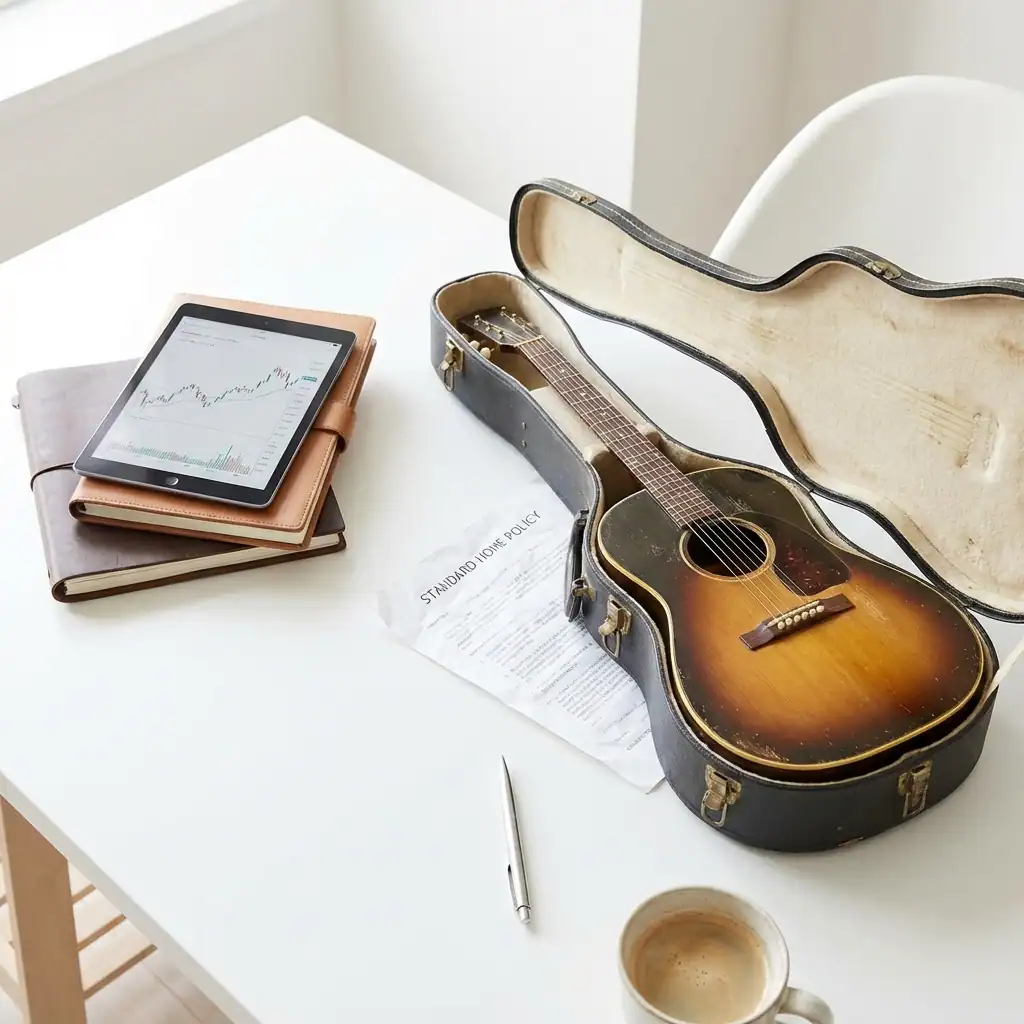
Many people assume their gear is safe because it’s tucked away at home. But even then, you need to be careful. If you’ve spent years curated a collection, have you actually told your insurer about it? We’ve written before about what to itemise in the home, and high-value instruments should be right at the top of that list.

Don’t Wait for a Disaster
The worst time to find out you’re under-insured is after the theft or the flood. We often see musicians who have "set and forgot" their policies. They’ve been paying the same premium for years, thinking they’re protected. But as the market moves, the policy stays static.
It’s worth taking an afternoon to do a "gear audit." Look up recent "sold" listings on sites like Reverb or eBay for the UK specifically. Don't look at the asking prices: look at what people are actually paying. You might be surprised to find that your "workhorse" amp has become a "collector's item."
Once you have those figures, check them against your policy documents. It sounds boring, we know, but checking the small print is the only way to ensure that "the McCartney Effect" doesn't leave you out of pocket. Look for "Agreed Value" policies if possible, as these are often better for vintage items where the market fluctuates.
Professional vs. Amateur Use
Another trap many UK musicians fall into is the "professional use" clause. If you’re a hobbyist who occasionally plays for fun, your home insurance might cover you (up to a limit). But the moment you accept money for a gig: even if it’s just £50 and a round of drinks: most standard insurers will classify you as a "professional."
If you try to claim for a stolen vintage guitar that was taken while you were performing, and you don’t have specialist music insurance UK that covers professional use, they might reject the claim entirely. It’s a harsh reality, but insurers are very specific about the risks they take on. Ensuring you have the right cover for how you actually use your gear is paramount.

Tips for Protecting Your Collection
While insurance is your safety net, prevention is always better. Here are a few quick tips to keep your vintage gear safe in 2026:
- Photographic Evidence: Take high-resolution photos of your gear, including serial numbers and any unique marks or scratches. This is vital for both insurance claims and recovery.
- Up-to-Date Valuations: For items worth over £1,000, try to get a professional valuation from a reputable UK guitar shop every two years.
- Security at Home: If you have a significant collection, consider upgraded locks or an alarm system. It’s all about being safe as houses to keep those premiums down.
- Discretion on Social Media: We all love to show off a new (old) purchase, but be careful about posting photos that make it obvious where you live or where your gear is stored.
- GPS Trackers: Small, discreet trackers like AirTags can be hidden inside amp cabinets or under pick-guards. They aren't foolproof, but they give you a fighting chance of recovery.
The Bottom Line
The McCartney Effect is a double-edged sword. On one hand, it’s fantastic that the instruments we love are being recognized as valuable pieces of cultural history. On the other hand, it makes the world a little bit more dangerous for the average player.
Whether you’re in a touring band or a bedroom enthusiast, your gear is an investment: both financially and emotionally. Don't let a spike in market value turn into a financial disaster. Take a look at your kit, check the current UK market prices, and dont wait for a disaster to update your cover.
At T&R Direct, we understand that a guitar isn't just a piece of wood and wire; it's your passion. Making sure it’s protected with the right insurance music equipment policy means you can focus on the music, rather than worrying about the "what ifs."
If you're unsure if your current home or business policy covers your growing collection, give us a shout.




About The Author: Penny
More posts by Penny