
If you've recently taken delivery of a gleaming new Porsche Taycan or you're eyeing up the latest Tesla, you're not alone. The luxury EV market is absolutely booming in 2026, and high-net-worth buyers are trading in their petrol-powered prestige motors for electric alternatives at a remarkable rate.
But here's the thing – whilst you've probably spent considerable time selecting the perfect spec for your new £100,000+ vehicle, have you given the same attention to what's powering it at home?
Your home charging setup might have cost anywhere from £2,000 to £15,000 depending on the installation complexity, and it's now a permanent fixture on your property. The question is: does your home insurance actually cover it?
The 2026 Luxury EV Landscape
The premium electric vehicle market has genuinely hit its stride this year. We're seeing the refreshed Porsche Taycan from around £85,000, the Mercedes-Benz EQS starting at approximately £102,900, and stunning newcomers like the Audi A6 Sportback e-tron and BMW i5 capturing the attention of discerning drivers.
These aren't just cars – they're statements. And they come with charging requirements that go well beyond plugging into a standard three-pin socket overnight.
The Charging Infrastructure Investment
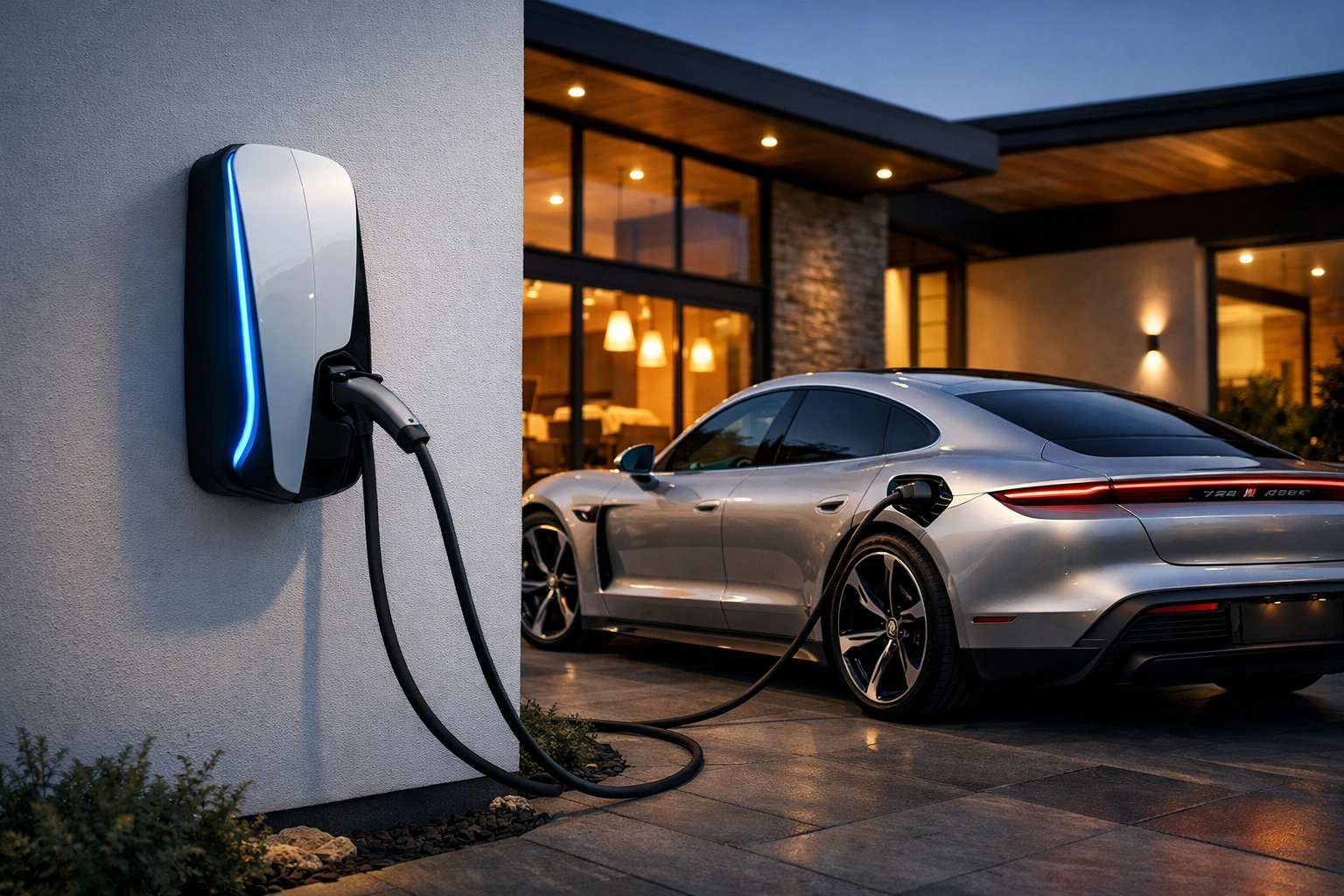
To properly service a high-end EV, most homeowners are installing Level 2 charging systems. These aren't the basic wall boxes you might see at your local supermarket car park. We're talking about sophisticated, often architect-designed charging stations that:
- Deliver 7kW to 22kW of charging power
- Include smart home integration and app control
- Feature premium finishes to match your property's aesthetic
- May require significant electrical upgrades to your home's main panel
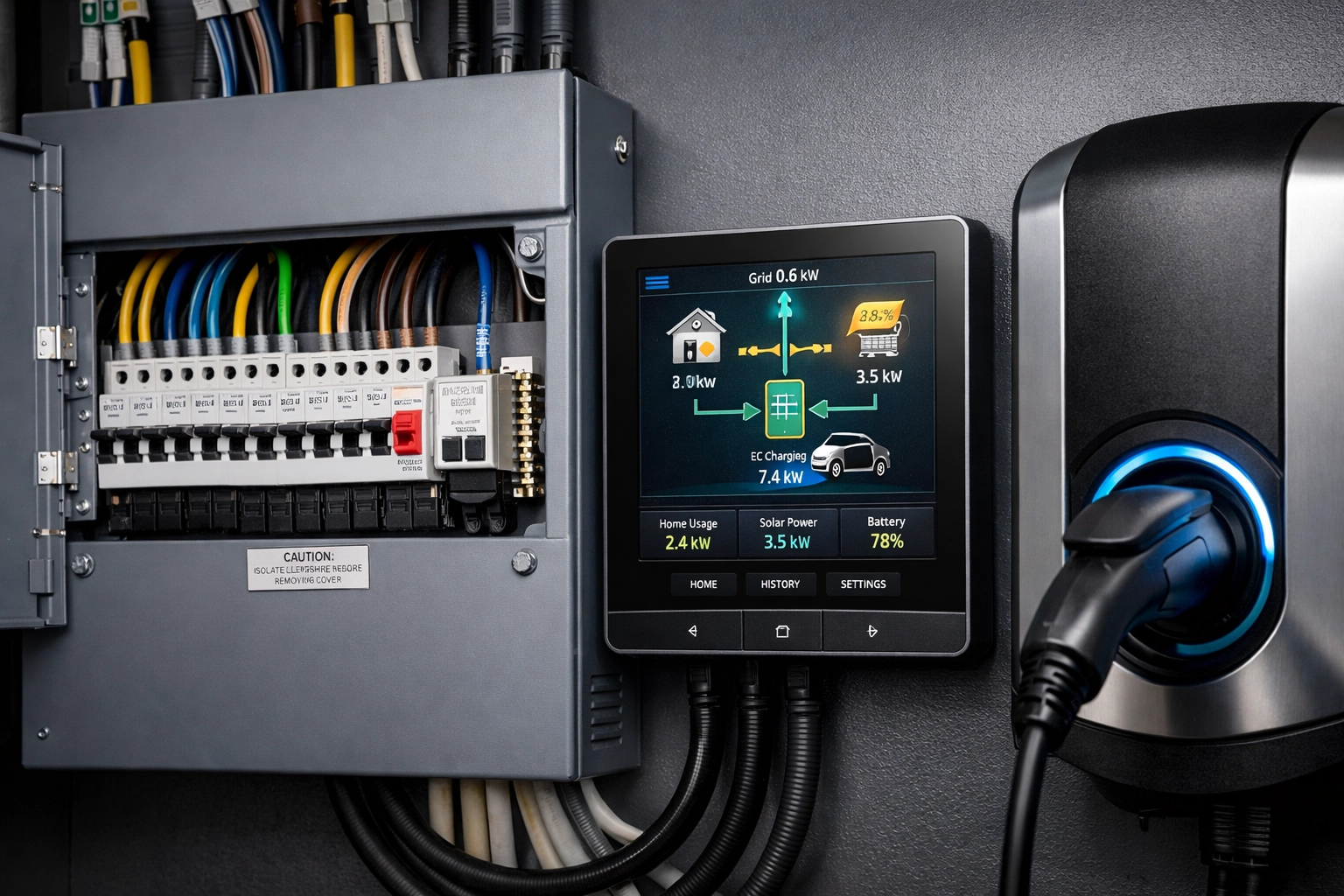
- Often incorporate solar panel integration or battery storage systems
The installation isn't trivial either. You might need upgraded consumer units, new dedicated circuits, trenching for underground cabling if your charging point is away from the house, and potentially even a three-phase power supply upgrade.
All told, a proper high-end charging setup for a luxury property can easily run £10,000 to £15,000. Some homeowners investing in whole-house energy management systems alongside their EV charging are spending considerably more.
The Insurance Grey Area
Here's where it gets interesting – and potentially problematic.
Most standard home insurance policies were written long before home EV charging became commonplace. Your policy might cover "fixtures and fittings," but does that explicitly include a 22kW charging station hardwired into your electrical system? What about the associated battery storage or power management equipment?
It's not always clear. And in the world of insurance, "not clear" usually means "not covered" when you need to make a claim.
What Could Actually Go Wrong?
You might be thinking this all sounds a bit overly cautious. After all, these are professionally installed systems from reputable manufacturers. What could possibly happen?
Quite a bit, as it turns out.
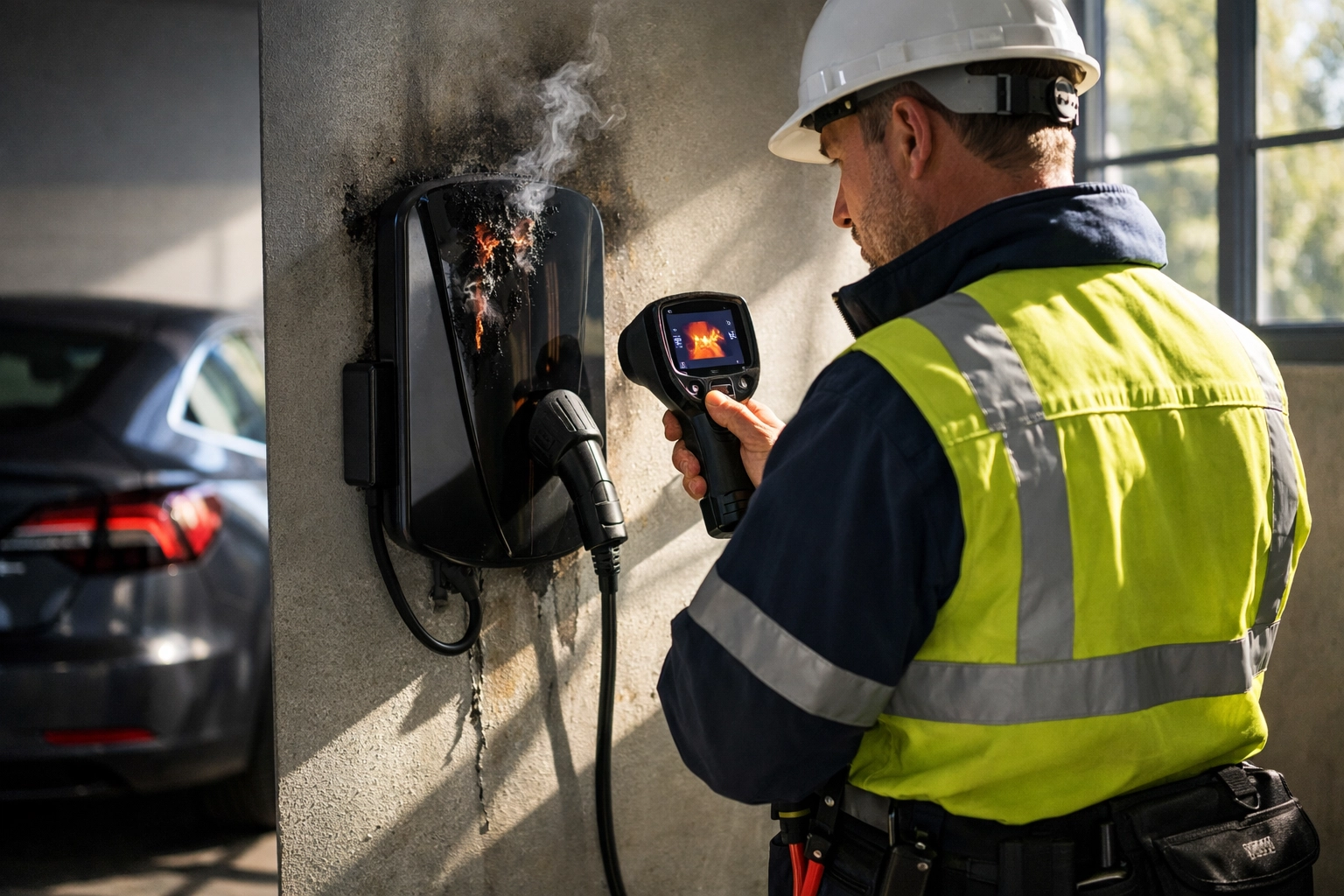
Electrical faults and fires are the obvious concern. Whilst rare, charging equipment can develop faults. There have been documented cases of charging units overheating, particularly when installations haven't been done to proper specifications or when the home's electrical system couldn't quite handle the sustained load.
Lightning and power surge damage is another consideration. A direct lightning strike or major power surge could potentially damage not just your charging unit, but also your vehicle if it's connected at the time. We're talking about several thousand pounds of equipment in an instant.
Physical damage happens too. Charging units mounted in driveways or garages can be struck by vehicles (yes, even your own – reverse parking incidents are surprisingly common). They can be damaged by contractors doing other work on your property, or simply by the wear and tear of British weather.
Theft and vandalism might seem unlikely for a piece of kit that's hardwired to your house, but the copper cabling alone has value, and charging cables themselves are increasingly targeted by thieves who know they're worth several hundred pounds.
And then there's liability concerns. If your charging equipment malfunctions and damages a guest's vehicle, or if someone is injured due to an electrical fault, you want to be absolutely certain your liability coverage extends to this equipment.
The High-Value Home Insurance Difference
This is where high value home insurance becomes particularly relevant. Standard home insurance policies often have limitations that might catch high-net-worth homeowners off guard, whilst specialist high-value policies typically offer:
Higher coverage limits that actually reflect the value of premium charging installations and associated equipment.
Broader definitions of what constitutes covered property, often explicitly including modern home technology and infrastructure.
New-for-old replacement rather than depreciated value, which matters when you've invested in a top-specification charging system.
Comprehensive liability coverage that contemplates modern risks, including damage to third-party vehicles.
Faster claims processing and specialist adjusters who understand these installations.
Questions to Ask Your Insurer
If you've already installed charging infrastructure – or you're planning to – here are the specific questions you should be asking:
Is my EV charging unit covered as a standard fixture, or do I need to add it as a specified item?
What's the coverage limit for electrical equipment and home infrastructure? Is it sufficient for my installation?
If my charging system causes damage to my vehicle or a visitor's vehicle, is that covered?
Does my policy cover the full replacement cost of a damaged charging unit, or only its depreciated value?
Are associated components like battery storage systems, solar inverters, and power management equipment included?
What documentation do you need regarding the installation? Do you require certification from a registered electrician?
Are there any specific maintenance requirements I need to follow to keep coverage valid?
The Timing Question
February is actually an ideal time to review your home insurance anyway. Many policies renew in the spring, and if you've recently installed charging infrastructure or you're planning to, now's the time to ensure you're properly covered before you need to make a claim.
Because here's the uncomfortable truth: most people discover they're underinsured when they try to claim, not before. And by then, it's too late.
Getting It Right
The good news is that securing proper coverage for your home charging infrastructure isn't particularly complicated – it just requires being proactive about it.
Start by documenting your installation. Keep all receipts, certification documents, and specifications for your charging equipment. Take photographs of the installation from multiple angles. Note the make, model, and power rating of your charging unit.
Then have a proper conversation with your insurance provider. If you're working with a specialist broker who understands high-net-worth insurance needs, they should be able to guide you through exactly what coverage you need and whether your current policy provides it.
Don't just accept vague reassurances. Get it in writing. If your charging infrastructure is covered, you want that explicitly stated in your policy documents.

Beyond the Charging Point
Whilst we're on the subject, it's worth considering the broader picture of high-value home technology. Your charging infrastructure is just one piece of an increasingly complex home technology ecosystem.
Many high-net-worth homeowners are also investing in:
- Whole-house battery storage systems (£8,000-£20,000)
- Solar panel arrays (£10,000-£25,000+)
- Smart home systems and integration
- Home energy management platforms
Each of these represents a significant investment that needs proper insurance consideration. Your home is becoming increasingly sophisticated, and your insurance coverage needs to keep pace.
The Bottom Line
Luxury electric vehicles represent the future of premium motoring, and they're brilliant to own and drive. But the infrastructure required to support them is a significant investment that deserves proper protection.
Take the time now to verify your coverage, close any gaps, and ensure that your insurance reflects the reality of your modern, high-value home. Your £100,000 Taycan deserves a charging setup that's properly protected – and so does your peace of mind.
At T&R Direct Insurance Services, we understand that high-net-worth homeowners have unique insurance needs that go well beyond standard policies. If you'd like to discuss your home charging infrastructure coverage or review your overall high value home insurance, we're here to help ensure you're properly protected.
After all, you've invested in the future of motoring. Make sure your insurance has caught up.





About The Author: Penny
More posts by Penny