
If you're a professional string player, your violin isn't just an instrument. It's your livelihood, your voice, and quite possibly the most valuable item you own. A quality professional violin can easily cost anywhere from £10,000 to well over £100,000 – and that's before we even mention the bow.
So here's a question worth asking: is your home contents insurance really up to the task of protecting it?
For most professional musicians, the answer is a rather uncomfortable "probably not." Standard contents cover was designed with televisions, laptops, and jewellery in mind – not a hand-crafted Italian instrument that appreciates in value with every passing year.
Let's unpack why your violin deserves specialist protection, and what you might be missing if you're relying on a bog-standard household policy.
The £2,000 Problem
Most homeowner's and renter's insurance policies cap musical instrument coverage at around £2,000. For a student with a factory-made violin, that might be adequate. But for a professional? It's laughably insufficient.
Even a mid-range professional violin from a respected contemporary maker will set you back £5,000 to £15,000. Add a quality bow – often valued at several thousand pounds itself – and you're well beyond what your contents policy will pay out.
What's worse, many musicians don't discover this gap until they file a claim. By then, it's far too late.
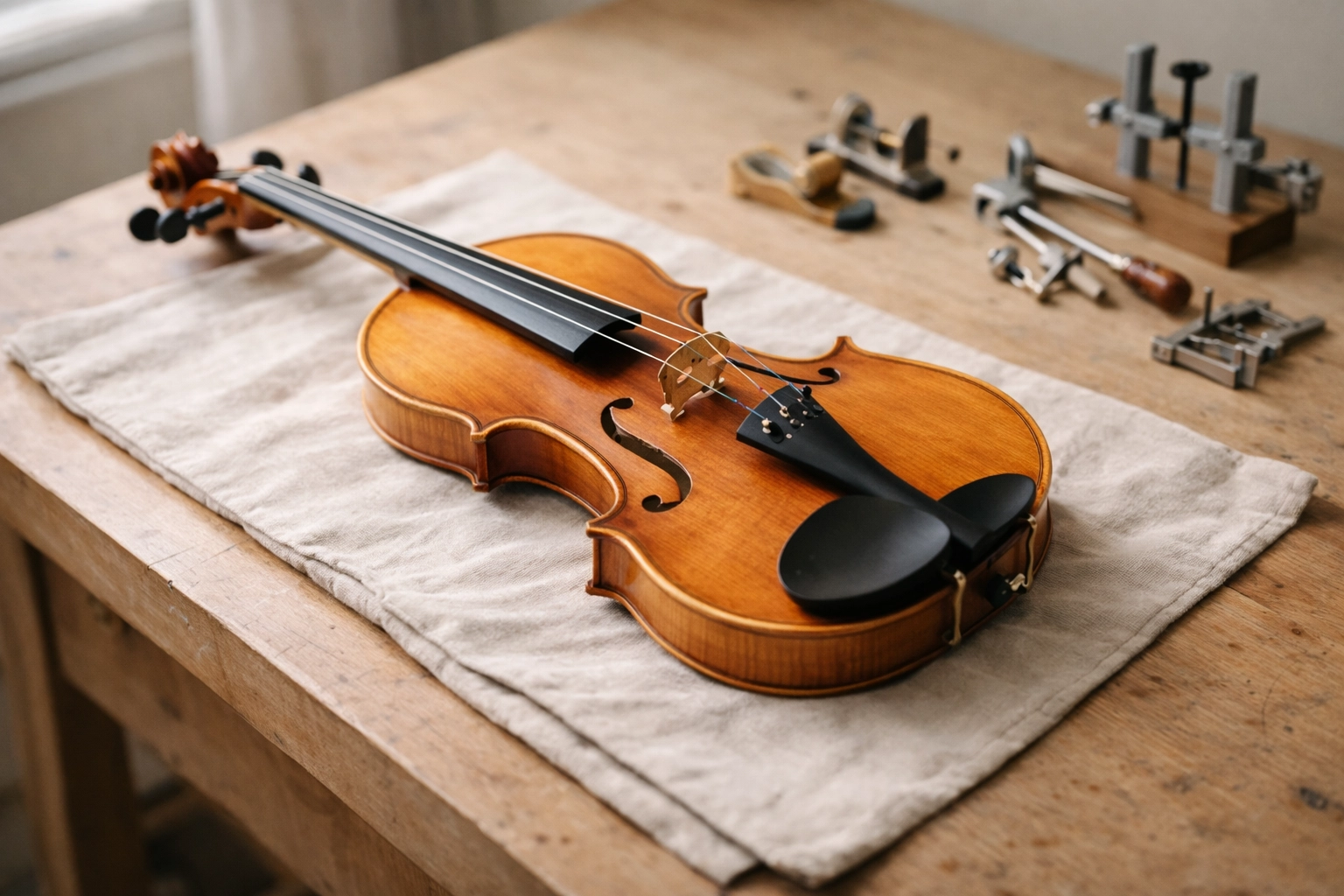
Actual Cash Value vs. Stated Value
Here's where things get a bit technical – but bear with me, because this could save you thousands.
Standard contents policies typically use something called Actual Cash Value (ACV) to settle claims. In plain English, that means they'll pay you what your item is worth today, factoring in depreciation.
For most household items, that makes sense. Your five-year-old sofa isn't worth what you paid for it. Fair enough.
But violins aren't sofas. A well-maintained professional instrument often appreciates in value over time. That 1920s French violin you inherited from your teacher? It's probably worth considerably more now than when it was purchased. An ACV payout would actually penalise you for owning something that's gone up in value.
Specialist musical instrument insurance, by contrast, typically uses Stated Value or Agreed Value coverage. You and the insurer agree on the instrument's worth upfront – usually backed by a professional valuation – and that's what you'll receive if the worst happens. No depreciation. No nasty surprises.
The Hidden Sting: Depreciation Following Repair
Let's talk about something that keeps professional violinists awake at night – what happens when your instrument is damaged but not destroyed?
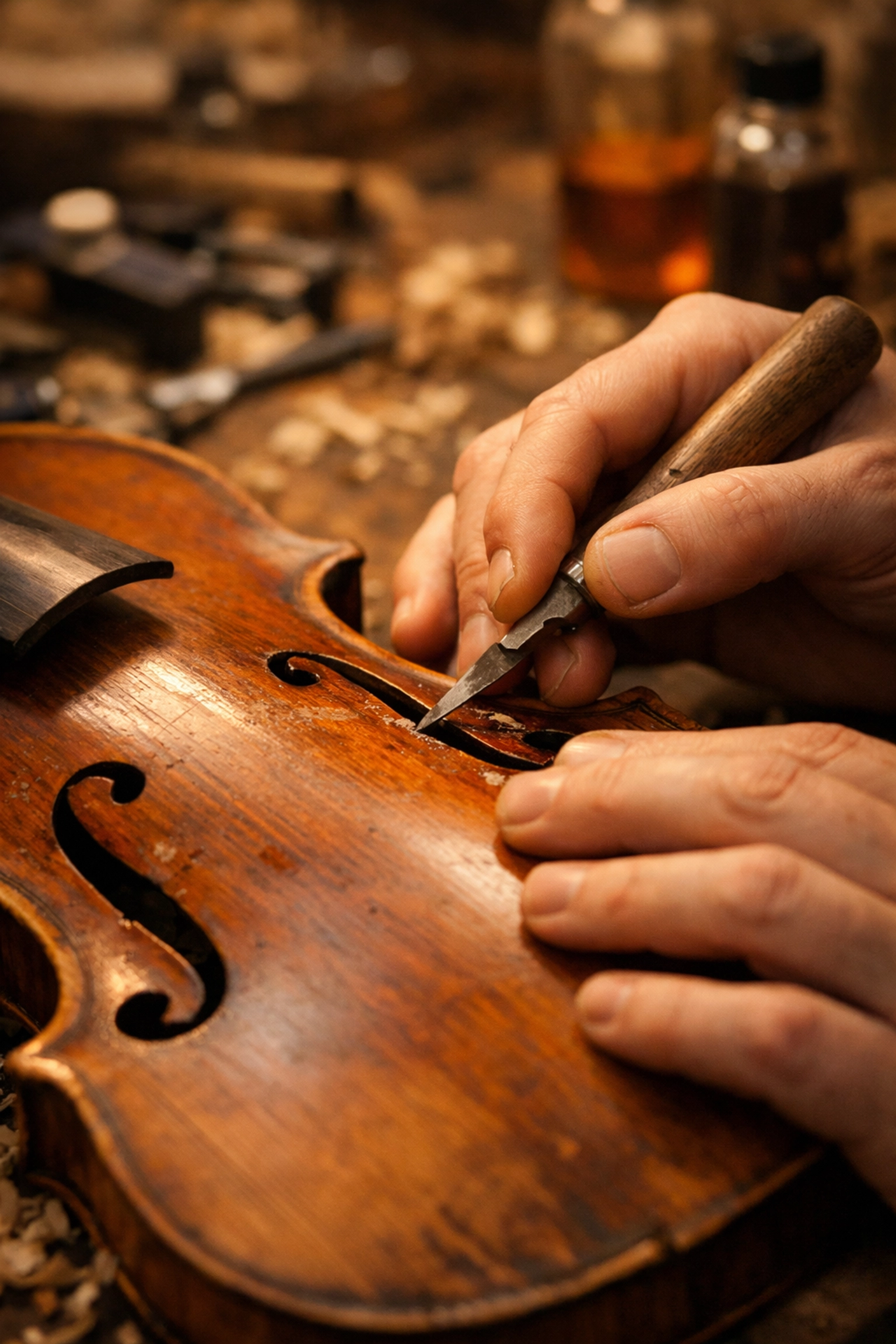
Imagine your violin suffers a crack to the top plate. A skilled luthier can repair it beautifully – structurally sound, tonally restored. But here's the catch: a repaired violin is worth less than an unrepaired one, even if the repair is invisible to the untrained eye.
This is called depreciation following repair, and it's a genuine financial loss that most contents policies simply don't recognise.
Specialist musical instrument policies often include cover for this depreciation. So if your £30,000 violin is now worth £25,000 after a repair, you could claim that £5,000 difference. Standard contents cover? You'd be lucky to get the repair costs covered, let alone the loss in value.
For professional musicians whose instruments are both their tools and their investments, this distinction is enormous.
When Your Violin Leaves the House
Here's another gap that catches musicians out: most contents policies only cover your belongings while they're inside your home.
That's all well and good for your washing machine. But your violin? It spends half its life in rehearsal rooms, concert halls, recording studios, and the back of taxis. A policy that only protects it within your four walls is a policy that's barely working for you.
Specialist instrument insurance covers your violin wherever it goes: whether that's a gig in Glasgow, a recording session in London, or an orchestra tour across Europe. Theft, accidental damage, fire, even loss in transit: it's all included.
Some policies even extend to cover instruments left in vehicles overnight, though you'll want to check the specific terms. (The general rule? Never leave a valuable instrument in a car boot if you can help it. But if you must, make sure you're covered.)
Professional Use and Liability
If you earn money from playing your violin – whether as a full-time orchestral musician, a freelance session player, or a private teacher – you're technically using it for business purposes.
Many standard contents policies exclude or limit cover for items used professionally. It's a clause that's easy to overlook until you're making a claim and discover your livelihood isn't covered.
Dedicated musician's insurance is designed with professional use in mind. Beyond protecting the instrument itself, many policies include:
- Public liability cover – essential if you teach or perform in venues
- Loss of income protection – if your instrument is damaged and you can't work
- Hire instrument cover – to keep you playing while yours is being repaired
These aren't luxuries. For a working musician, they're necessities.

Getting Your Valuation Right
One of the smartest things you can do – whether you have specialist cover or not – is get a proper, up-to-date valuation of your instrument.
A professional appraisal from a qualified luthier or specialist dealer gives you documented proof of your violin's worth. This is invaluable when setting up an insurance policy, and it protects you against disputes if you ever need to claim.
Valuations should be updated every three to five years, or whenever the market shifts significantly. Violin values can fluctuate based on maker reputation, provenance, and broader market trends, so what was accurate five years ago might be well off the mark today.
Keep your valuation certificate somewhere safe (a digital copy in the cloud is wise), along with photographs of your instrument from multiple angles. Document any distinguishing features, repairs, or modifications. If your violin ever goes missing or is damaged beyond recognition, you'll be grateful for the evidence.
A Note on Tax
Here's a small silver lining for self-employed musicians: specialist instrument insurance premiums are typically tax-deductible as a business expense. Your home contents insurance? Not so much.
It's worth chatting with your accountant, but for many professional players, the cost of proper cover is at least partially offset by the tax benefit.
Finding the Right Cover
So what should you look for in a specialist violin insurance policy? Here's a quick checklist:
- Agreed or stated value cover – not actual cash value
- Worldwide coverage – or at least cover for wherever you regularly perform
- Depreciation following repair – a must for high-value instruments
- Professional use included – explicitly, not as an afterthought
- Accessories covered – bows, cases, and strings add up quickly
- No excess, or a reasonable one – some policies offer nil excess for an additional premium
It's also worth checking whether the policy covers pairs and sets. If you own multiple bows or a matched set of instruments, you'll want to know how a claim on one affects the others.
The Bottom Line
Your violin is more than just a possession – it's the foundation of your career and, quite possibly, a cherished family heirloom. It deserves protection that understands its true value, not a generic policy designed for household electronics.
Standard contents cover might tick a box on paper, but when it comes to the nuances of professional musicianship – depreciation following repair, worldwide travel, agreed valuations – it simply falls short.
Specialist musical instrument insurance isn't an extravagance. For professional string players, it's a sensible investment in your future.
If you'd like to explore your options or get advice tailored to your situation, the team at T&R Direct is always happy to help. After all, peace of mind is worth having – especially when your livelihood is on the line.





About The Author: Penny
More posts by Penny