
If your home insurance renewal lands in the next few weeks, you might notice something slightly unwelcome: the price has gone up.
It may not be a dramatic increase. In fact, that is part of the point. Recent industry reporting suggests that, after a long period of falling average premiums, many large UK insurers have started raising prices in a more targeted way.
The change is being linked to higher rebuilding costs and the growing cost of weather-related claims. So, if your renewal quote looks different this autumn, it is not necessarily an administrative error – although it is still worth checking carefully.
The good news is that you do not have to accept the renewal price automatically. A few sensible checks could help you avoid paying for cover you do not need, or paying more than necessary for the cover you do.
What is changing?
Average home insurance prices had been easing for several quarters. The Association of British Insurers (ABI) reported that the average price paid for combined buildings and contents insurance fell to around £375 in the first quarter of 2026.
By the second quarter, that average had risen to approximately £383 – the first quarterly increase since early 2025, according to reporting based on the ABI’s premium tracker.
That is not a huge rise on its own. But it suggests the market may have turned a corner.
Comparison-site prices can look lower than these industry averages, partly because they show competitive new-business quotes. Existing customers may see a different picture at renewal, particularly if their property is in an area affected by flooding, subsidence or storm damage.
And insurers do not price every home in the same way. Your renewal may be affected by your property’s location, age, construction, rebuild cost, claims history and the level of cover you have selected.
Why are premiums rising?
There are two main pressures behind the recent change.
Rebuild costs
Buildings insurance is based on the estimated cost of rebuilding your home – not its market value.
That means the insurer is considering the cost of materials, labour, site clearance, professional fees and other expenses involved in restoring the property after a serious event. It is not simply asking what your house might sell for on the open market.
Building materials and labour costs have increased over recent years. Even if your home has not changed, the cost of replacing it may have done so.
This is one reason insurers have been reviewing their pricing. If a claim costs more to settle, the policy needs to reflect that risk.
It is worth remembering that rebuild cost and property value are very different figures. A house could have a high market value because of its location, while its rebuilding cost is considerably lower. The reverse can also happen with an unusual or listed property.
Weather-related claims
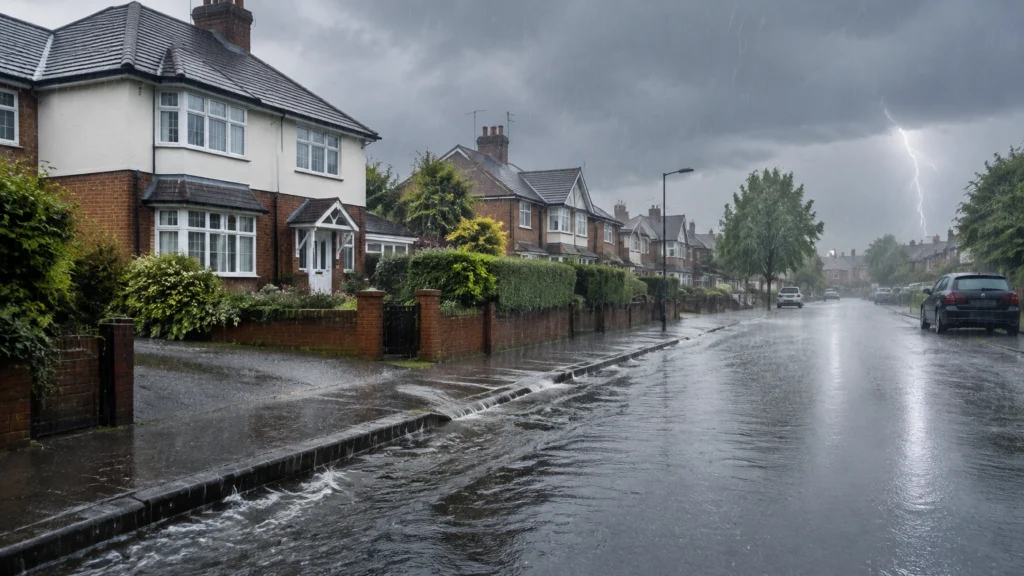
The UK has seen a run of costly weather events, including storms, flooding and periods of heavy rainfall. These events can result in widespread damage to roofs, walls, windows, gardens and contents.
The ABI reported record home insurance payouts during the first quarter of 2026, with weather-related claims and average claim costs both increasing. Flooding and subsidence can be especially expensive, as repairs may involve structural work, drying and restoration, specialist surveys and temporary accommodation.
Insurers use claims data to reassess risk. If a particular type of event becomes more frequent or more expensive, premiums and excesses may be adjusted accordingly.
That does not mean every household will see a large increase. But homes in weather-exposed locations, or properties with previous claims, may experience more noticeable changes.
Check your renewal
When the renewal letter or email arrives, it is tempting to glance at the price and click “renew”. It is one of those jobs that can easily sit beside the washing machine repair and the mystery cable drawer for another month.
Before renewing, check the following.
Buildings sum insured
Review the buildings sum insured and confirm that it still reflects your property.
If you have extended your home, converted a loft, added an outbuilding or carried out substantial improvements, the rebuild figure may need updating. Equally, do not increase it simply because local house prices have risen. Buildings insurance should reflect the rebuilding cost, not the sale price.
Some policies use a calculated or index-linked rebuild figure. Others ask you to provide an amount. If you are unsure, it may be sensible to obtain a professional rebuilding-cost assessment, particularly for a large, old, listed or non-standard property.
Underinsuring your home can create problems if you need to claim. Overinsuring may mean paying more than necessary.
Contents sum insured
Your contents cover should be enough to replace the household items you own today.
It is easy to underestimate this figure. Walk through each room and consider furniture, carpets, curtains, electrical goods, clothing, kitchen equipment, children’s items and garden belongings. Replacing everything after a major loss could cost considerably more than expected.
You might be surprised how quickly the total grows once you include a television, laptop, phone, freezer, washing machine and all the smaller items in cupboards and drawers.
A room-by-room inventory, supported by photographs, can make this process easier. Keep a copy somewhere safe – ideally outside your home or in secure cloud storage.
For more practical home protection ideas, T&R Direct’s insurance articles include guidance such as Beat The Burglar, Burst Pipes and Safe & Sound.
Review valuable items
Many contents policies have a maximum amount they will pay for a single item. This is sometimes called a single-item limit.
If you have bought an expensive bicycle, laptop, camera, musical instrument, piece of jewellery or artwork since your last renewal, check whether it needs to be listed separately.
A wedding ring disappearing down the plughole is unpleasant enough. Discovering afterwards that it was worth more than your policy’s single-item limit is an avoidable second disappointment.
You may need a recent valuation or proof of purchase for certain items. Check the policy wording, as requirements vary between insurers.
And remember that some policies may require valuable belongings to be specified even when they are kept at home. Others may provide limited cover away from the property. The detail matters.

Compare cover, not just prices
Shopping around can help, but the cheapest quote is not automatically the best one.
When comparing your renewal with another policy, check that the cover is genuinely like-for-like. Look at:
- Buildings and contents limits
- Accidental damage
- Escape of water cover
- Alternative accommodation
- Home emergency cover
- Personal possessions away from home
- Legal expenses cover
- Trace and access cover
- Garden and outbuilding limits
- The policy excess
- Any exclusions or special conditions
A quote can look cheaper because it has a higher excess or fewer benefits. It may also exclude accidental damage, which could be important if you want protection for everyday mishaps such as a cracked television screen or a paint spill on a carpet.
Some extras may be available separately, while others are included as standard. Take a few minutes to compare the key features before deciding.
T&R Direct offers flexible home insurance, including buildings and contents options from a panel of leading UK insurers. Combined cover may also attract a discount, depending on the insurer and the policy selected.
Check the excess
The excess is the amount you agree to pay towards a claim.
For example, if your claim is accepted for £2,000 and your excess is £250, the insurer may contribute £1,750. Some policies have separate compulsory and voluntary excesses, so check the total amount that could apply.
Increasing your voluntary excess can sometimes reduce the premium. But it is only worthwhile if you could comfortably afford that amount after an incident.
A lower annual price is not much help if the excess makes a smaller claim impractical. Consider the balance between the premium, the excess and the protection you actually need.
Do not auto-renew too quickly
Auto-renewal is convenient, but it may not produce the best price or the most suitable cover.
Start reviewing your policy before the renewal date so you have time to compare alternatives. You can contact your current insurer to ask whether anything can be changed, but do not assume the first revised figure is the final word.
When requesting quotes, give accurate information about your home. This includes the construction, occupancy, security, previous claims, bedrooms, outbuildings and any business use. Incorrect information could affect a future claim.
It is also sensible to check whether a policy is suitable if you work from home, run a small business, take in a lodger or leave the property unoccupied for extended periods. Standard home insurance may not cover every situation.

Prepare for renewal
Home insurance prices may be moving upwards again, but that does not mean you should simply accept an unexplained increase.
Before your autumn renewal:
- Check the buildings rebuild figure.
- Review the contents sum insured.
- List new or high-value belongings.
- Compare single-item limits.
- Check the excesses.
- Compare policy features and exclusions.
- Request like-for-like quotes.
- Confirm that your household circumstances are accurately described.

The market is changing because claims and rebuilding costs are changing. Still, careful preparation can help you understand your renewal and make a more informed choice.
And if you are considering a new policy, it is worth comparing the options available through T&R Direct’s insurance services. A competitive quote is useful, but the right level of cover matters just as much.




About The Author: Penny
More posts by Penny