
Autumn can be one of the busiest times of year for UK musicians. Summer festival season may be winding down, but rehearsal calendars start filling up again, pub and club gigs pick up, and plenty of bands squeeze in short tours before winter really sets in.
That usually means one thing – your kit starts travelling a lot more.
And that is where the insurance questions creep in. What happens if a guitar is damaged in transit? What if gear disappears from a van while you grab a coffee? What if you are using hired equipment for a run of dates? Or a venue asks for proof of public liability at the last minute?
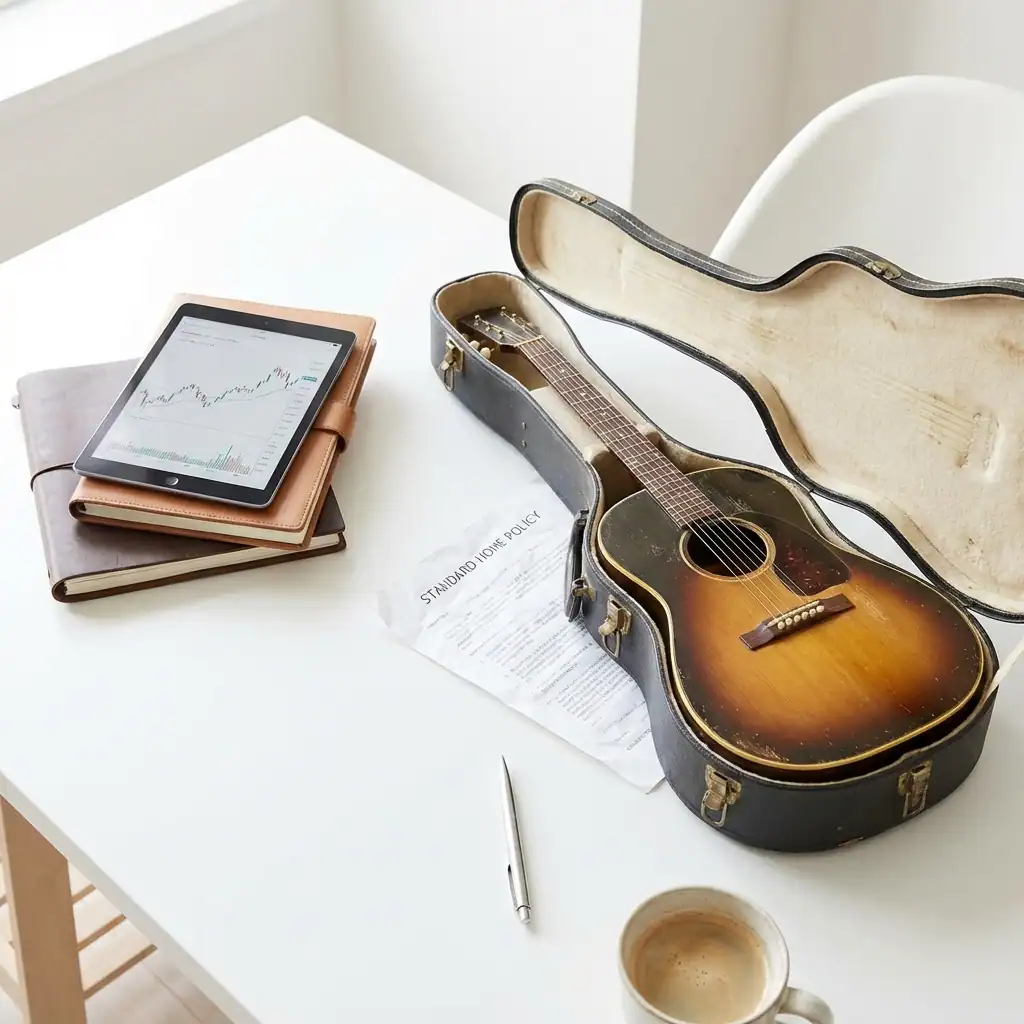
If you are preparing for autumn gigs, rehearsals and weekends on the road, it is worth checking whether your cover actually matches how you work. For many musicians, standard home contents insurance simply is not designed for professional use, touring logistics or equipment that regularly leaves the house.
Why autumn is different
Short tours and one-off gigs can look fairly low-key on paper. A couple of rehearsals, a Friday night in Leeds, maybe a Saturday support slot in Bristol – nothing too dramatic.
But the risks stack up quickly.
You might be:
- Moving instruments in and out of venues more often
- Leaving cases backstage between soundcheck and set time
- Loading gear into vehicles in the dark
- Storing equipment overnight at rehearsal spaces, hotels or friends' houses
- Borrowing or hiring extra kit to cover a bigger show
- Travelling abroad for a few dates or a quick city-break run of gigs
None of that is unusual. It is just normal musician life. But it does mean your insurance music equipment needs can be very different from ordinary household cover.
Home insurance is often not enough
This catches a lot of people out.
A standard home contents policy may cover belongings kept at home for private use. But once instruments and equipment are used professionally – for paid gigs, teaching, recording sessions or touring – the position can change.
And cover can become even less reliable when the equipment is:
- Taken away from home
- Left in a vehicle
- Stored temporarily at another location
- Used by band members or colleagues
- Hired in for a performance or recording
- Treated as business equipment rather than personal belongings
So if you are relying on home contents insurance because your amp technically lives in the spare room, it is worth checking the wording very carefully. It seems simple, but insurers often draw a firm line between hobby use and professional use.
For musicians earning money from performances, sessions or studio work, specialist music insurance UK cover is usually the more sensible place to start.
Away from home
Once your gear leaves the house, your risks change straight away.
A home policy may include limited personal possessions cover, but that often is not designed for multiple instruments, specialist electronics, PA gear, flight cases, laptops, interfaces or pedalboards travelling from rehearsal room to venue and back again.
You may need protection for:
- Instruments taken to rehearsals
- Equipment used at gigs
- Cases and accessories
- Laptops and production kit
- Items carried between venues
- Equipment temporarily stored off-site
T&R Direct’s instrument insurance is designed for instruments and music equipment used away from home, which is exactly the sort of real-world issue autumn gigging throws up.

Accidental damage
Musicians do not need a disaster movie for things to go wrong. Sometimes it is just a speaker stand knocked sideways in a rush, a keyboard dropped on a stairwell, or a guitar case clipped by a closing fire door backstage.
Accidental damage matters because many losses are not dramatic theft claims – they are plain old mishaps.
When reviewing cover, make sure you understand:
- Whether accidental damage is included as standard
- If it applies only at home or also while travelling
- Whether items are covered during loading and unloading
- How fragile or electronic items are treated
- Whether there are different terms for accessories and cables
It is worth remembering that "careless but normal" situations are still common. Rehearsal rooms, cramped stages and wet loading bays are not exactly showroom conditions.
Theft from vehicles
This is one of the biggest pressure points for bands on the road.
A lot of theft claims happen in ordinary moments – ten minutes at a petrol station, a meal stop after load-out, or a van parked outside overnight because everyone is too tired to carry everything upstairs.
But many policies either restrict cover for equipment left in vehicles or exclude it altogether unless strict security conditions are met.
So check:
- Is theft from a vehicle covered at all?
- Does the vehicle need to be locked and alarmed?
- Must equipment be hidden from view?
- Are there time restrictions, such as daylight-only cover?
- Is overnight vehicle storage excluded?
- Are there specific requirements for signs of forced entry?
This is also where standard home contents insurance can fall short. Even if the item is insured at home, that does not mean it is insured in a van at 11pm outside a Travelodge.
If your band regularly transports gear, this should be one of the first things you check under your band insurance arrangements.
Transit and handling
Transit cover is about more than major road accidents. It can also relate to what happens while equipment is being moved from one place to another.
Think about the usual routine:
- Load from rehearsal room
- Drive to venue
- Unload at side entrance
- Wait in a corridor
- Move kit backstage
- Reload after the set
- Drive on to the next stop
That is a lot of handling. And each step creates opportunities for damage, loss or mix-ups with someone else's gear.
A policy for insurance music equipment should ideally reflect that the risk is not just "at home" or "on stage" – it is everything in between.
Overnight storage
Autumn touring is full of awkward overnight decisions.
Do you leave the drum hardware in the van? Carry every hard case into the hotel? Trust the locked rehearsal room until morning? Store smaller items in a mate's flat after the show?
There is no one perfect answer, but insurance terms matter here. Some policies are stricter if equipment is stored in unattended vehicles overnight. Others may have conditions for temporary storage away from your main premises.
That means it is worth planning ahead before the first date, not at midnight in a rainy car park.
A few sensible habits can help:
- Decide in advance what must never stay in the vehicle overnight
- Keep a list of your highest-value items
- Photograph serial numbers and distinguishing marks
- Use hard cases and security locks where appropriate
- Split the most valuable kit between band members if practical
Insurance is important, but good touring habits still do plenty of heavy lifting.
Hired and borrowed equipment
Lots of autumn gigs involve extra kit. Maybe you hire a keyboard for a theatre date, borrow a backup amp for a support slot, or rent recording gear for a live session capture.
That is where musicians can get caught in a gap. Your own policy may not automatically cover hired-in equipment, and the hire company's cover may not fully protect you either.
So check:
- Are hired items covered?
- Are loaned items covered?
- Does cover apply only while the item is in your custody?
- Is there a separate excess for hired equipment?
- Do you need to declare the item in advance?
If your work includes recording as well as gigging, recording studio insurance may also be relevant – especially if you move between rehearsal, recording and live environments with the same equipment.

Public liability
A surprising number of venues, councils and promoters now expect proof of public liability cover – even for smaller events.
Public liability is there to help if your band is held responsible for injury to a member of the public or damage to someone else's property. For example:
- A loose cable causes a trip
- A speaker stand falls and damages venue property
- A member of the public is injured near your equipment area
That may sound dramatic, but claims do not have to be headline-worthy to become expensive. Legal costs alone can quickly become a headache.
T&R Direct’s musical insurance options can include public liability support, and it is worth checking this before a venue asks for paperwork the day before load-in.
Cancellation cover
Autumn schedules can be tight. If one date falls apart, the costs can ripple through the rest of the weekend.
Cancellation cover may be worth considering if your band has prepaid expenses or financial commitments tied to performances, such as:
- Venue hire
- Travel costs
- Accommodation
- Equipment hire
- Non-refundable deposits
- Promoted events where lost revenue is a concern
Not every band needs this, but if you are putting money on the line for a run of shows, it is worth asking whether cancellation protection should form part of your music insurance UK planning.
Overseas extensions
A quick run of dates in Ireland or mainland Europe can feel informal – almost like an extended weekend away with more cables.
But overseas gigs bring their own insurance questions. You may need to check:
- Whether instruments are covered abroad
- How long overseas cover lasts
- If public liability extends outside the UK
- Whether hired equipment abroad is included
- If policy conditions differ in transit or storage overseas
T&R Direct’s instrument insurance and recording studio insurance information notes worldwide cover up to 90 days as standard on some arrangements, which can be especially useful if autumn plans stretch beyond the UK.
A practical pre-tour check
Before your next rehearsal block or short tour, make sure you check:
-
Who owns what?
List instruments, cases, electronics and accessories by owner and value. -
Is professional use covered?
Do not assume a home policy will respond just because the gear is stored at home. -
What happens away from home?
Confirm cover for rehearsals, gigs, backstage areas and temporary storage. -
Is accidental damage included?
This matters more than many musicians expect. -
What are the rules for vehicles?
Check theft conditions, overnight exclusions and storage requirements. -
Are transit and loading covered?
The risk is often in the movement, not the performance. -
Do you need hired equipment cover?
Especially for one-off bigger dates. -
Do venues require public liability?
Sort proof of cover before anyone starts emailing in all caps. -
Are overseas dates included?
Even short trips need checking. -
Would cancellation cover help?
If you are paying deposits and travel costs, possibly yes.
Keep the tour moving
Autumn gigging should be about set lists, timings and whether anyone remembered the spare IEC lead – not about discovering too late that your cover stops at the front door.
If you are comparing insurance music equipment options, looking for band insurance, or need recording studio insurance that reflects how your gear is really used, specialist cover can make far more sense than trying to squeeze professional risks into a standard household policy.
To explore music insurance UK options for instruments, bands and studios, T&R Direct can help you review the practical risks before the next run of dates begins.
If you would like to discuss buildings, contents or high value home insurance, contact T&R Direct to explore your options with a broker.




About The Author: Penny
More posts by Penny